How to Tell When a Lemon Is Ripe: A Winter Picking Guide
October 29, 2026 - Winter Harvest

October 29, 2026 - Winter Harvest
Meyer and Eureka get lumped together on nursery labels as though they were interchangeable, and they are not. One is a compact, cold-hardy, thin-skinned fruit that behaves more like an orange than a lemon; the other is the upright, thorny, properly sour lemon that supermarkets have trained us to expect. Choosing badly costs you years. A Eureka crammed into a small courtyard turns into a thicket of spurs and thorns, while a Meyer planted where you wanted sharp, abundant juice can taste oddly mild. The differences in flavour, hardiness, size, thorniness and yield are real, and they matter far more in a small garden than in a commercial grove.
The Meyer lemon (Citrus × meyeri) is not a true lemon at all. It is a cross between a lemon and a mandarin or sweet orange — botanists still argue about the exact parentage — which explains the rounder shape, the orange tint in the flesh and the softer acidity. It travelled from China to the United States in the early twentieth century and was widely planted until growers realised it carried citrus tristeza virus without showing symptoms. The virus-free selection sold today as 'Improved Meyer' replaced it, so any Meyer you buy now is a healthier plant than your grandmother's.
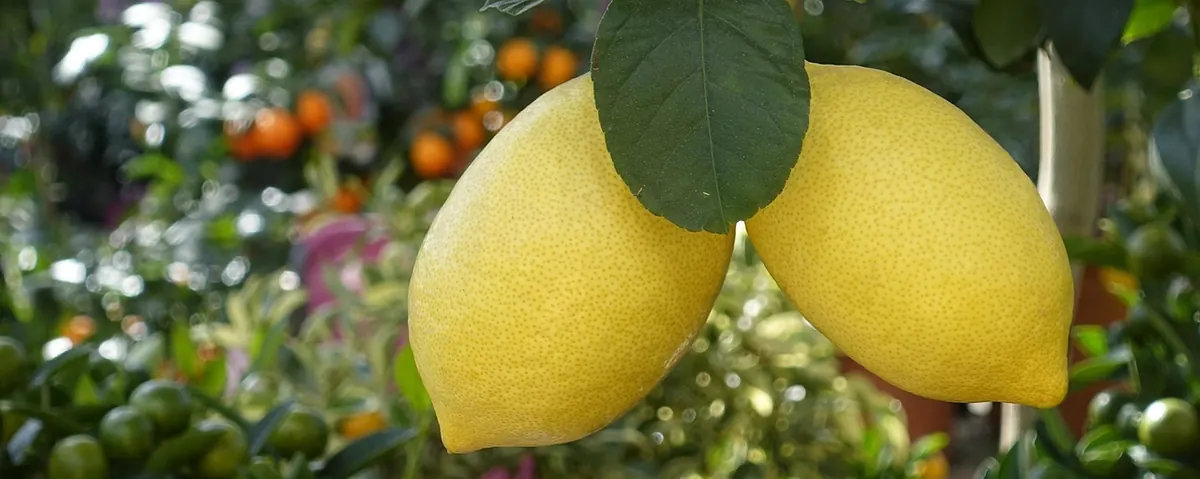
The Eureka lemon (Citrus limon) is the real thing: a chance seedling that appeared in California in the 1850s and has been the standard commercial lemon in warm climates ever since. Fruit is oblong, pale yellow, with the pointed nipple at the tip that people recognise as lemon-shaped. The rind is thick, the juice is abundant and properly acidic, and the tree is vigorous, upright and armed.
This is where most gardeners have strong opinions, and where the two fruits diverge most.
A Meyer tastes like a lemon that has spent time near a mandarin tree. The juice is sweeter and softer, the aroma is distinctly floral, and the thin peel is soft enough to grate in seconds and mild enough to eat. It makes excellent marmalade, lemon curd, salad dressings and a lemonade you barely need to sweeten. Roast a chicken with halved Meyers and the result is fragrant rather than sharp.
The catch is acidity. When a recipe depends on lemon juice to cut through fat or set a structure — mayonnaise, a sharp vinaigrette, a firm lemon tart — Meyer can taste flat. Use more of it, or keep a bottle of true lemon juice in the fridge for those jobs.
Eureka delivers the classic hit: high acid, high juice, intense zest oil. It is the lemon you want for preserving, for limoncello, for anything where the sourness has to hold its own against sugar or butter. The thick rind zests beautifully and yields a lot of peel for candying. It is also nearly seedless, which is a small daily pleasure when you are squeezing by hand.
If you garden anywhere with frost, this is the section to read twice. Meyer is the hardier of the two, with established trees reported to shrug off brief dips to roughly -4°C to -6°C, losing leaves and fruit but usually regrowing from the framework. Eureka is more tender and can be damaged a couple of degrees below freezing, especially young trees and those in pots.
Neither will survive a hard, prolonged freeze outdoors. What helps in practice:
Meyer is naturally compact: roughly 2–3 metres in the ground, dense and bushy, and content in a 40–50 litre pot for years. Grafted onto a dwarfing rootstock it stays smaller still, which is why it is the default choice for patios, balconies and conservatories. Pruning is light work — thin the middle occasionally to let air through and shorten any lanky shoots.
Eureka wants room. A mature tree can reach 4–6 metres, upright and open, with long, vigorous branches. It can be pruned, but regrowth from hard cuts is fast, thorny and awkward, so it is better to give it the space from the start rather than fight it. In cooler climates Eureka is happiest in a large greenhouse or a sunny conservatory border, where it will still crop well.
Both trees bear thorns, but not to the same degree. Meyer has fewer and softer ones, mostly on vigorous new growth; you can harvest it without gloves most days. Eureka is genuinely spiny, especially on water sprouts and long pruning regrowth, and heavy crops sit behind clusters of them. Wear leather gloves and use long-handled snips.
On yield, both are generous, but the pattern differs. Meyer crops in flushes through the year, with the main harvest in winter, and holds fruit on the tree for weeks without it going soft. Its weakness is overcropping: a heavy year can be followed by a light one, so thin the young fruit if the tree looks exhausted. Eureka is the more consistent producer, fruiting almost year-round in warm climates with a main crop in winter and spring, and the fruit stores well once picked.
Both need the same fundamentals: at least six hours of direct sun, free-draining soil on the acidic side, steady watering rather than soaking-then-drought, and a citrus fertiliser through the growing season. Neither tolerates sitting in wet ground.
Let the conditions decide, then the kitchen.
Whichever you choose, buy from a nursery that sells certified virus-free stock, check the rootstock label, and give the tree two or three years to settle before judging its yield. A lemon is a long conversation, not a quick purchase. Pick the one that suits your climate first and your cooking second, and you will be squeezing your own fruit for a decade or more.
Photo: anncapictures / Pixabay
Colour alone won’t tell you a lemon is ready. Judge ripeness by weight, firmness, scent and taste, then store the...
A practical comparison of nine lemons for home gardens, covering flavour, cold hardiness, yield and climate fit,...
October 29, 2026 - Winter Harvest
Copyright © 2026 Limone Della Neve. All Right Reserved.